
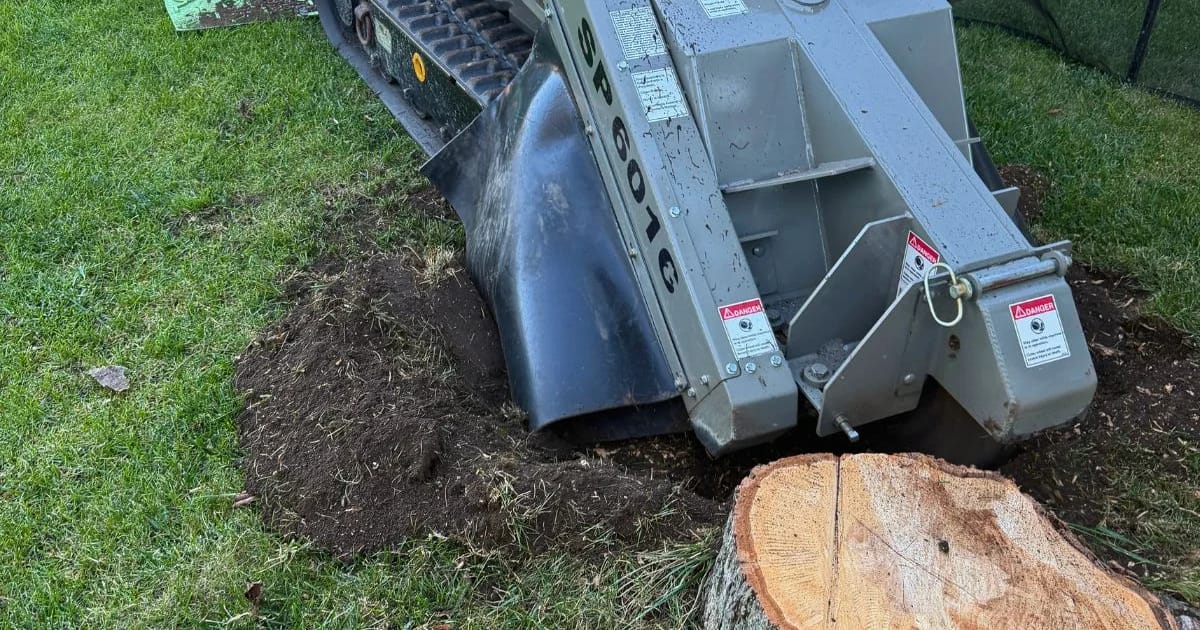
The tree’s gone. The stump isn’t. And now it’s a tripping hazard, a mower-blade killer, and a home for ants and fungus right in the middle of your yard.
You’ve got two ways to get rid of it: grind it or pull it out. Here’s the difference, and how to pick.
What is stump grinding?
A stump grinder is a machine with a heavy spinning wheel lined with carbide teeth. It chews the stump down into wood chips, usually several inches below the soil line, so you can cover it with dirt and grass. The roots stay in the ground and break down naturally over time.
We run a Carlton stump grinder, and our compact equipment fits through most backyard gates.
The upside:
- Fast. Most residential stumps take well under an hour.
- Way less damage to your lawn, landscaping and nearby plants
- Costs less than full removal
- Leaves you a pile of mulch you can use in your beds
The downside:
- The big roots stay underground (they rot away over the next few years)
- You’ll want to fill the hole with topsoil before you reseed
What is full stump removal?
Full removal means digging out the stump and its main root ball, usually with heavy equipment. It leaves a big hole that has to be backfilled and tears up a much bigger area of your yard.
When it makes sense:
- You’re putting in a foundation, an addition, a patio or a driveway right where the stump is
- The ground will be fully excavated for construction anyway
For almost every homeowner who just wants their yard back, grinding is the better call.
What about the roots?
This is the number one question we get. After grinding, the remaining roots are cut off from the tree and slowly decay. Some trees will push up a few sprouts from the roots for a season. Just mow them or clip them off and they’ll quit.
Can you plant a new tree in the same spot?
You can, but it’s better to go a few feet to the side. The old roots and wood chips take time to break down, and a new tree will get off to a stronger start in fresh soil.
Don’t forget the utilities
Gas lines, electric and irrigation often run right past old stumps. Utilities should be marked through Diggers Hotline (811) before any grinding starts. That’s one more reason this isn’t a rent-a-grinder Saturday project.
Get rid of it for good
Whether it’s one stump from a tree we just took down or a whole yard full of old ones somebody else left behind, we’ll grind them out, clean up, and leave your yard ready for grass. Free estimates, no obligation.
We serve Muskego, Franklin, Greenfield, West Allis, Wauwatosa, Waukesha and 20+ more communities across Southeast Wisconsin, with 740+ five-star reviews behind us.
Call 262-402-3990 or request your free estimate online. Tree Service Done Right. Zero Excuses.