
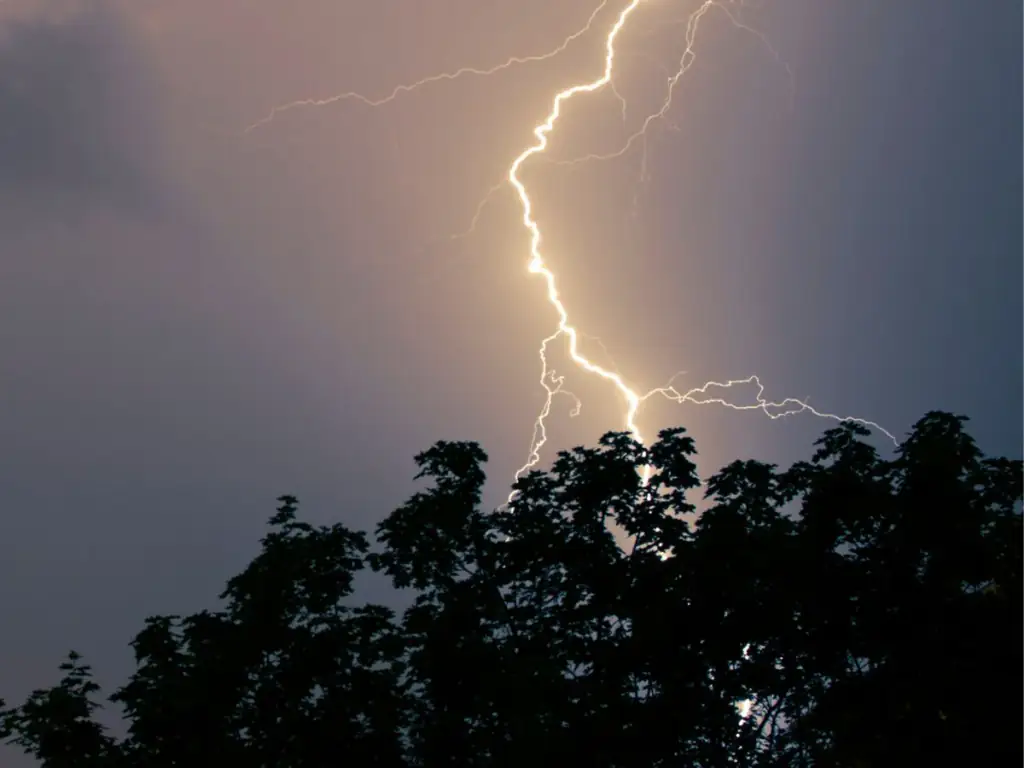
Lightning follows the path of least resistance to the ground. A tree is often that path — tall, full of moisture, and rooted deep into the earth. A lightning protection system doesn’t prevent a strike. It gives the electrical charge a controlled, low-resistance path that bypasses the tree entirely.
The system intercepts the strike at the crown, conducts it down the outside of the tree through a copper cable, and disperses the charge harmlessly into the soil through a grounding rod. The tree survives. The property around it stays safe.
01
Air terminals (lightning rods) are installed at the highest points of the tree's crown — typically 2 to 3 per tree depending on canopy spread. They intercept the strike before it reaches the tree itself.
02
A heavy-gauge copper down conductor runs from the air terminals down the trunk to ground level. Copper is used because of its exceptional electrical conductivity — it gives the charge an easy, controlled path.
03
At the base of the tree, the conductor connects to a grounding rod driven deep into the soil. The rod disperses the electrical charge safely into the earth — well away from structures, root systems, and anything above ground.
04
As the tree grows, the system needs periodic inspection — typically every 3 to 5 years — to ensure hardware is still properly positioned and the conductor isn't being constricted by bark growth. We advise on the appropriate inspection interval when we install.
2 to 3 stainless or copper-tipped terminals installed at the highest points of the crown. Intercept the strike before it reaches the tree. Positioned based on canopy spread and dominant branching.
Heavy-gauge copper cable running from the air terminals down to the grounding system. Copper is specified for its conductivity and corrosion resistance. Secured to the tree with lag-bolt standoffs that allow for natural movement and growth.
A copper-clad grounding rod driven into the soil at the base of the tree. Disperses the electrical charge safely into the earth. Positioned to direct charge away from root systems and any nearby structures.
All clamps, connectors, standoffs, and fasteners are included. Hardware is selected for corrosion resistance and long-term outdoor performance. Everything installed in accordance with current industry standards.
Lightning superheats the moisture inside a tree’s trunk in a fraction of a second — converting it to steam and blowing the bark outward explosively. The heat can ignite the tree directly, or travel underground through the root system.
Even a strike that doesn’t immediately kill the tree causes massive internal damage. Bark stripping, cambium damage, and root system shock often result in decline and death over the following weeks or months — sometimes years later.
Southeast Wisconsin averages over 40 thunderstorm days per year and sits in one of the most lightning-active regions of the upper Midwest. Lakefront communities along Waukesha and Racine counties face elevated exposure from water-enhanced storm cells moving off Lake Michigan.
Homeowners insurance may cover structural damage from a lightning-struck tree, but it won't replace a 100-year-old oak. The appraised value of a mature specimen tree can exceed $10,000–$50,000+. A protection system costs a fraction of that.
Trees near docks and boathouses create a specific risk — a strike can travel through the tree's root system into the dock structure and into the water, creating a shock hazard for swimmers. This is a documented cause of open-water electrocution incidents.
★★★★★
“Last year I had 3 large trees come down in a storm. Husky gave me a reasonable quote, were prompt and courteous. Work done on time, clean up to satisfaction. Wouldn’t hesitate to hire again.”
— C.R.

Verified Review
★★★★★
“Used Husky after a snow storm. Quick to return our call, fit us right in. Crew was timely, extremely efficient, and professional. Incredible clean up and the cost was beyond fair.”
— Deb M.
Verified Review
★★★★★
“Needed a large spruce taken down close to the house and electrical lines. Everything was easy — from quote to removal to stump grinding. Very impressed with how fast and clean the job was.”
— Taryn J.
Verified Review
A tree lightning protection system intercepts a lightning strike at the top of the tree through air terminals, then safely conducts the electrical charge down through a heavy-gauge copper cable and disperses it harmlessly into the soil through a grounding rod — bypassing the tree entirely. The charge goes around the tree, not through it.
Trees near structures (roofs, docks, boathouses, garages), trees on lakefront or elevated terrain, high-value or irreplaceable mature trees, trees shading outdoor gathering areas, and isolated trees that stand significantly taller than their surroundings are all strong candidates. If you’re unsure, we’ll assess the tree and give you an honest recommendation.
No system can guarantee complete protection under all conditions. What a properly installed system does is dramatically reduce the risk of catastrophic damage by giving the electrical charge a controlled, low-resistance path to ground that bypasses the tree. The tree is protected — not made invincible.
The hardware itself — copper conductors, air terminals, and grounding rod — is designed for long-term outdoor use and will last many years. The system should be inspected every 3 to 5 years as the tree grows to ensure hardware positioning is still correct and the conductor isn’t being constricted by bark growth.
Cost depends on tree height, canopy spread, number of air terminals needed, and site conditions. Call 262-710-2796 or fill out our quote form and we’ll get back to you with pricing based on the details of your tree.
Yes. The system is adaptable to any species and any canopy shape. We assess the tree’s structure, identify the highest and most exposed points in the crown, and design the air terminal placement accordingly.
Coverage varies by policy. Many standard homeowners policies cover damage to structures caused by a lightning-struck tree but don’t cover the tree itself. Some policies have specific lightning provisions. We recommend reviewing your policy — and considering that a protection system costs far less than the loss of a mature specimen tree.
We install tree lightning protection systems across Waukesha, Milwaukee, and Racine counties — with particular focus on lakefront communities, elevated terrain, and properties with mature specimen trees.
If you have a high-value tree you’re concerned about, call us. We’ll come out, assess the situation, and give you a straight recommendation on whether protection makes sense and what it would cost.
Waukesha County
Milwaukee County
Racine County
