Winter Burn, Cold Wind & Snow: How Wisconsin Winters Damage Your Trees (And What to Do About It)
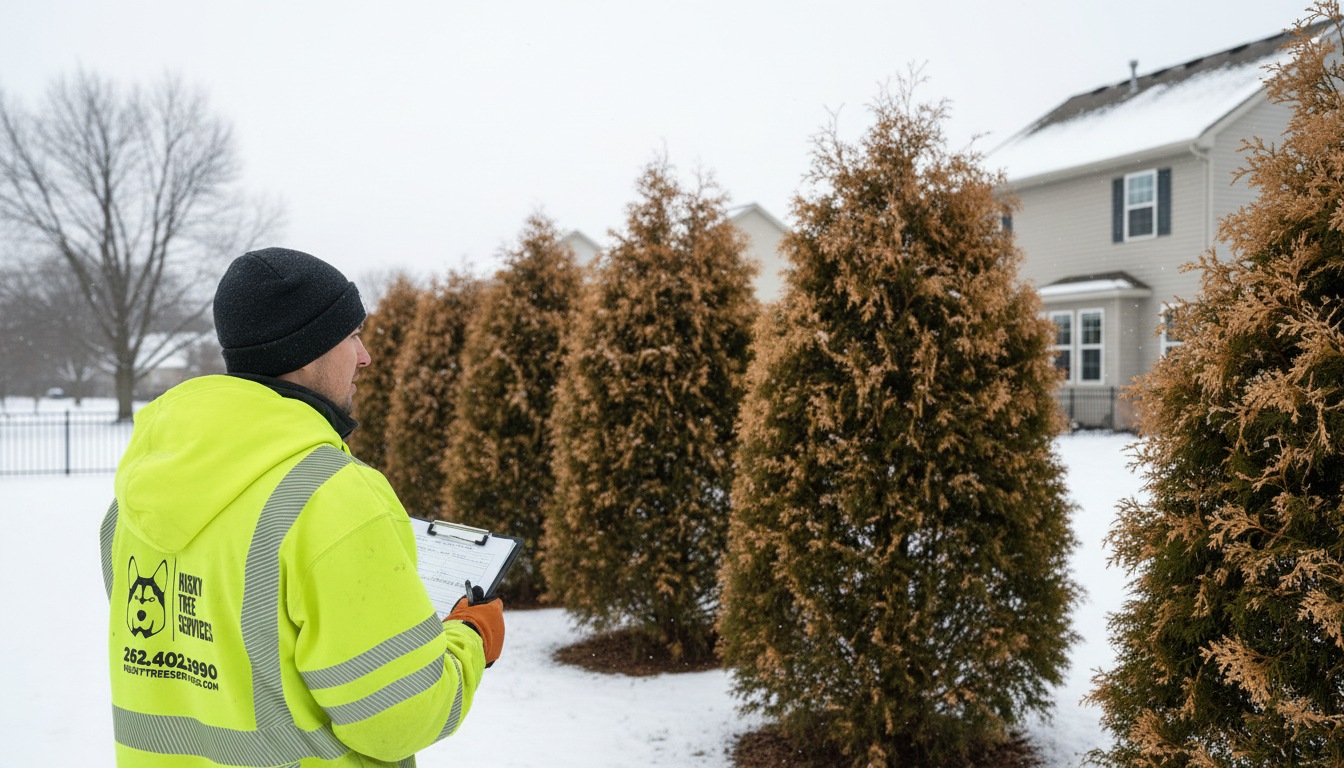
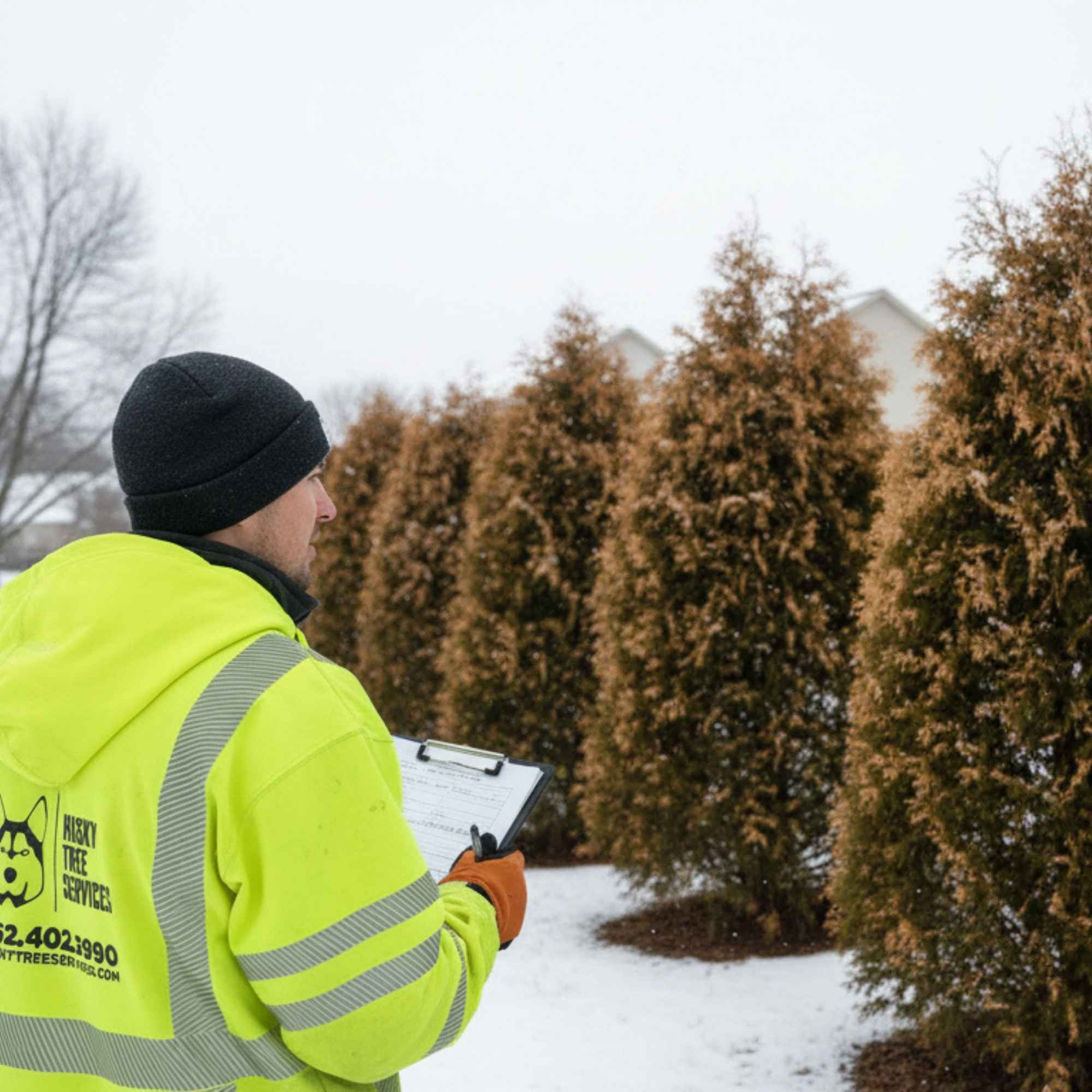
Professional arborist evaluating landscape tree health in Southeast Wisconsin.
Professional Tree Removal & Tree Services in Muskego, WI
WISCONSIN WINTERS CAN BE BRUTAL ON TREES
Every year, we see homeowners shocked in spring when their arborvitae, spruce, and pine start turning brown, branches fail to leaf out, and entire sections of trees don’t recover. What looks like “sudden” damage in April actually started months earlier during winter.
One of the biggest culprits is winter burn, also called wind burn — and it’s far more common than most people realize.
WISCONSIN WINTERS ARE BEAUTIFUL–
BUT ARE BRUTAL ON TREES
Every year, we see homeowners shocked in spring when their arborvitae, spruce, and pine start turning brown, branches fail to leaf out, and entire sections of trees don’t recover. What looks like “sudden” damage in April actually started months earlier during winter.
One of the biggest culprits is winter burn, also called wind burn — and it’s far more common than most people realize.
WHAT IS WINTER BURN (WIND BURN)?
Winter burn happens when evergreen trees lose moisture faster than they can replace it.
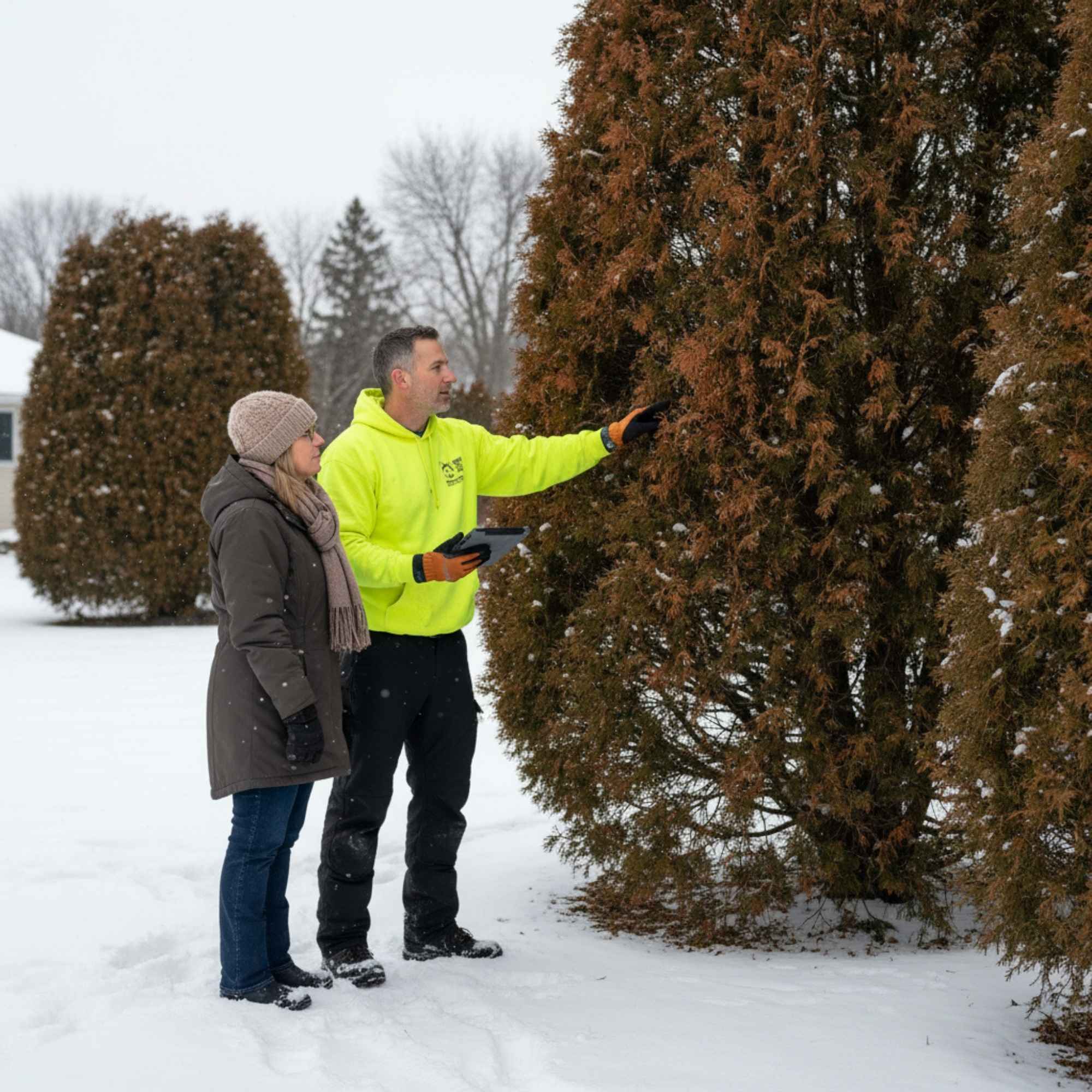
Frozen ground blocks water uptake while cold wind and winter sun pull moisture out of the needles.
The tree dries out and becomes stressed, leading to:
- Brittle branches
- Dead tips
- Thinning foliage
- • Sections that never green back up in spring
Arborvitae are especially vulnerable, which is why we inspect them so often every spring.
WHAT IS WINTER BURN?
Winter burn happens when evergreen trees lose moisture faster than they can replace it.
Frozen ground blocks water uptake while cold wind and winter sun pull moisture out of the needles.
The tree dries out and becomes stressed, leading to:
• Brittle branches
• Dead tips
• Thinning foliage
• Sections that never green back up in spring
Arborvitae are especially vulnerable, which is why we inspect them so often every spring.
WHY WISCONSIN WINTERS ARE SO HARD ON TREES
Wisconsin creates the perfect environment for winter damage:
WHY WISCONSIN WINTERS ARE SO HARD ON TREES
Wisconsin creates the perfect environment for winter damage:
DEEP FREEZES
Lock water in the soil
STRONG WINDS
Strips moisture from needles
HEAVY SNOW & ICE
Overloads branches
DEEP FREEZES
Lock water in the soil
STRONG WINDS
Strips moisture from needles
HEAVY SNOW & ICE
Overloads branches
TREES MOST AT RISK:
While any tree can be affected, we see the most winter damage on:
Arborvitae
Spruce
Pine
Young or newly planted trees
Trees in open, windy areas
TREES MOST AT RISK:
While any tree can be affected, we see the most winter damage on:
Arborvitaes, spruce trees, pine trees, young or newly planted trees, trees in open or windy areas.
SIGNS YOUR TREES HAVE WINTER DAMAGE
Watch for these early warning signs:
- Browning or yellowing needles
- Brittle branches that snap easily
- Sparse or thinning foliage
- Split leaders
- Trees leaning after snow melt
If you notice these symptoms, it’s a strong indicator that winter stress has already taken a toll.
SIGNS YOUR TREES HAVE WINTER DAMAGE
Watch for these early warning signs:
• Brittle branches that snap easily
• Sparse or thinning foliage
• Split leaders
• Trees leaning after snow melt
If you notice these symptoms, it’s a strong indicator that winter stress has already taken a toll.
HOW TO PROTECT YOUR TREES FROM WINTER DAMAGE
The good news is that winter damage is preventable with the right approach.
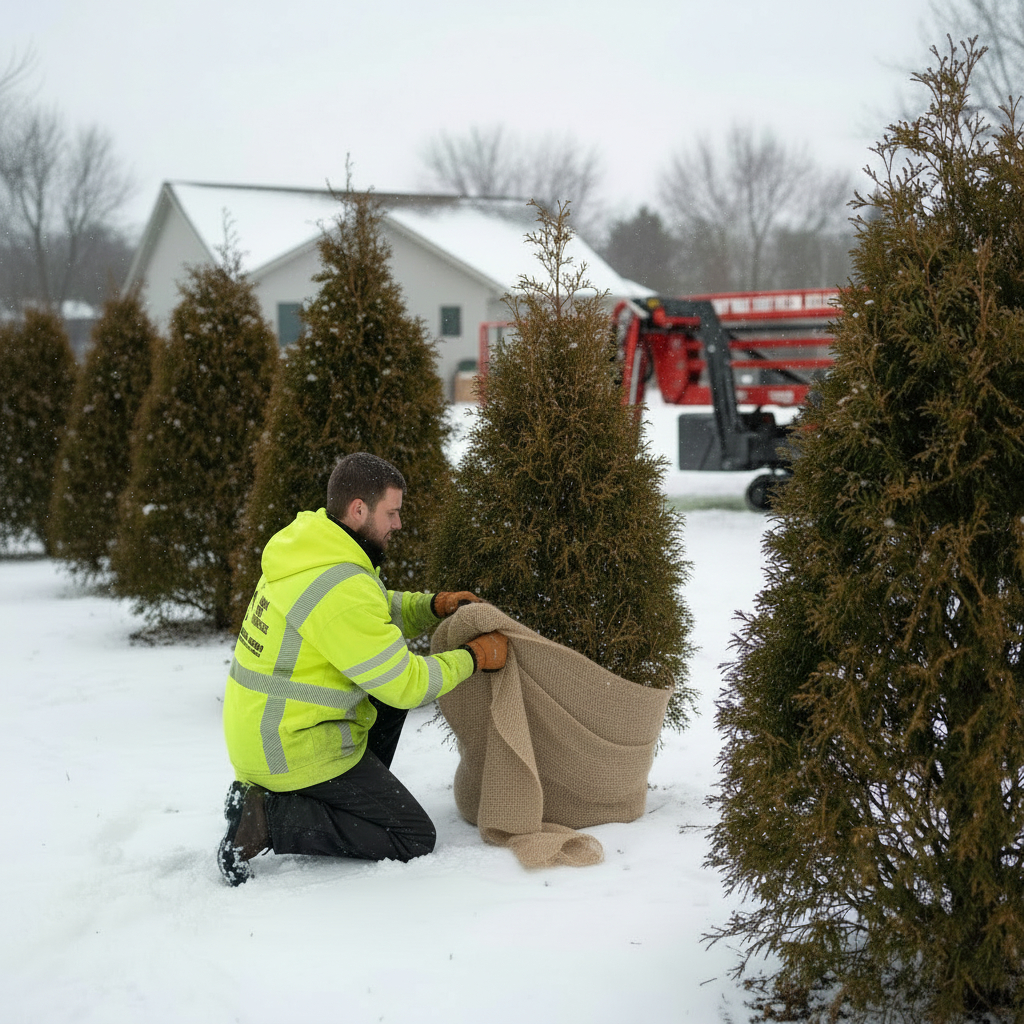
1. Install Wind Protection: Burlap wind screens reduce drying winds and sun exposure, especially for young arborvitae.
2. Water Before and During Winter Thaws: Deep watering before the ground freezes and during winter warm-ups helps trees store moisture.
3. Mulch Around the Base: Mulch insulates roots, stabilizes soil temperature, and retains moisture.
4. Manage Snow Load: Gently remove heavy snow from branches to prevent breakage and splitting.
5. Schedule a Professional Winter Inspection: An arborist can identify weak structure, early damage, and risk factors before spring storms hit.
HOW TO PROTECT YOUR TREES FROM WINTER DAMAGE
The good news is that winter damage is preventable with the right approach.
1. Install Wind Protection: Burlap wind screens reduce drying winds and sun exposure, especially for young arborvitae.
2. Water Before and During Winter Thaws: Deep watering before the ground freezes and during winter warm-ups helps trees store moisture.
3. Mulch Around the Base: Mulch insulates roots, stabilizes soil temperature, and retains moisture.
4. Manage Snow Load: Gently remove heavy snow from branches to prevent breakage and splitting.
5. Schedule a Professional Winter Inspection: An arborist can identify weak structure, early damage, and risk factors before spring storms hit.
PROTECT YOUR TREES FROM WINTER
Our arborists are already inspecting trees across Southeast Wisconsin to help homeowners get ahead of winter damage. If you’re worried about your trees, we’ll give you a clear, honest plan to protect them.
PROTECT YOUR TREES FROM WINTER
Our arborists are already inspecting trees across Southeast Wisconsin to help homeowners get ahead of winter damage. If you’re worried about your trees, we’ll give you a clear, honest plan to protect them.